Showing posts with label Concept Car. Show all posts

Sunday, September 26, 2010

Peugeot Sport Cars Epine Concept Cars Inspired by Formula One and Motorcycles

Peugeot Sport Cars Epine Concept Cars derived from a project to create a hybrid eco-friendly vehicle. The Peugeot Epine Concept design study was developed to have a sportscar-like performance while creating a new way to get in touch with nature. Inspired by Formula One cars and motorcycles, Epine features a whale skeleton, as a tribute to Mother Nature.
Peugeot Sport Cars Epine Concept Cars Inspired by Formula One and Motorcycles
The concept car was created by Daniel Schumpert. Peugeot Epine was basically a project that was supposed to turn into an environmentally friendly hybrid vehicle, but eventually it turned into a “consumer’s racing car”.
This Peugeot Sport Cars Epine Concept Cars Inspired by Formula One and Motorcycles ride relies on the Epine system, with an innovative seating arrangement and the drive-by-wire technology, as far as steering is concerned. The energy source of the vehicle is placed at the back, while the storage area is at the front of the car. The major technical feature of this car is the Epine system that allows a complete seating arrangement by adopting the drive-by-wire technology to run the steering system.
The rear-engined sportscar is minimalistic with an exposed frame, Peugeot Sport Cars Epine Hybrid Concept Cars uses the Michelin Tweel concept airless wheels, with a positive impact on the suspension system.
Turns out that the wheel spokes are able to compress and decompress, thanks to the materials they’re made out of, allowing a wide variety of car motions. This futuristic Peugeot measures 4,260 mm (length), 1,882mm (width) and 1153mm (height).

Thursday, September 23, 2010

2010 Lotus Sports Cars Elite Concept Cars


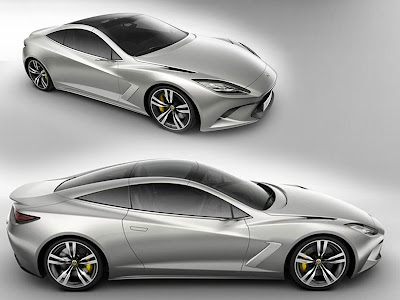
British sports car company unveil at the Paris Motor Show the sun starts to rise for the dawn of Lotus' new era - the Elite will redefine "modern classic". So here it is, the Lotus Sports Cars Elite, the first taste of what's to come from Lotus in the future. This is not only beautifully elegant, in accordance with the burden of Lotus’ appraises, that car with the center consisting of several by the identical cutting-edge technological innovation Lotus has submitted a bid. Retractile hard top version of the cunning and consumption with optional cross with KERS technology is a special case with Lotus cutting technology to provide perfect performance.
The 2010 Lotus Sports Cars Elite Concept Car is labeled as a “production intent prototype and is scheduled to go on sale in 2014 with a pricetag around £115,000 (approximately $180,000). Set for release in spring 2014, this is an innovative, exciting GT that will set a new benchmark in design, performance and emissions. And it s not all about sleek lines and stunning bodywork with this particular 2+2, what hides beneath this shark like exterior perfectly does the aesthetics justice. A front-mid positioned 5.0l V8 engine delivering up to 620 PS meaning drivers can expect to go from 0-100 km/h in approximately 3.5 to 3.7 seconds.
2010 Lotus Sports Cars Elite Concept Cars
First up, the Elite will offer a retractable hardtop roof, adding significant weight to the automobile. It may weigh in at 3,600 pounds.  This is a far step from Lotus’ usual super-light vehicles mentality. The Elite has a 2+2 seating configuration and is directly aimed at the competing with the Ferrari 612.
"Make no mistake, there's a definite market requirement for the Elite - it's the ultimate sports car feel with comfort and space. There will always be those who believe that Lotus should stick to small sports cars but we didn't take the decision to design something like the Elite lightly, it's based on months of careful research and planning. It's worth noting this sector has been very successful for us in the past and now the Elite raises the benchmark higher still." As for the new, awesome design of the car, the designer Donato Coco has designed what can only be described as a truly stunning car. It is completely different from all Lotus models of the past and really indicates that Lotus is ready to move from the ‘affordable’ sports car market deep into supercar territory.
With the likes of Porsche, Aston Martin and Ferrari in its crosshairs, it’s not surprising that the new Lotus Elite sports car is significantly heavier and more powerful than the company’s current offerings. In fact, with an expected kerb weight of 3,637 pounds, the Elite is very different to Lotus’ usual assortment of light weight track cars but its designers are confident it will still have the ultimate sports car feel--just with a little more comfort and space. The design, specification and performance figures for all Production Intent Prototypes will be confirmed following official testing and will be available from Lotus Cars.

Monday, September 13, 2010

2010 Mazda Sport Cars Coupe Shinari Concept Car

Mazda launched the 2010 Shinari sports cars coupe at the Paris Motor Show in early October, a four door concept car that shows the new design. This design as well as to replace the Nagare design. Mazda Shinari Concept represents the profound connection of driver and machine and the beginning of Mazda's latest design theme 'KODO-Soul in Motion'. Shinari exhibits a functional aesthetic that will continue to evolve as Mazda continues to define its next generation of vehicles.
2010 Mazda Sport Cars Coupe Shinari Concept Car
The development of the Shinari Concept was actually a collaboration between three of Mazda’s design centers in Japan, Germany and the United States. Mazda also said it is working to improve the quality level of its interiors for future vehicles. With 2010 Mazda Sport Cars Coupe Shinari Concept Car as the first step, Ikuo Maeda, general manager of Mazda's design division, aims to create original Mazda designs that will be recognized around the world. He summarizes his resolve in the following words:
"My goal is to create designs that people can point to proudly and say, 'This is a Mazda design'. There is no need for Mazda to build cars for people who are only concerned with 'style' and 'trends'. Whether working on sports cars or compact cars, I have always worked to create designs that evoke an emotional response in people and I hope to keep doing the same as I remain fully committed to develop designs for people who love and admire cars. It is my personal belief that the only way to create designs that fundamentally connect with people and to create designs they love, is if the people creating them are absolutely passionate about cars and are willing to make that passion a firm policy for design expression.
The Mazda Shinari is a pure design concept model of a four-door, four-seater sport cars coupe which perfectly expresses the 'KODO - Soul of Motion' design theme in a graceful and carefree form. All of Mazda Shinari Concept's body surfaces appear as if constantly undergoing transformation. There is no static shape to be found, as if the car is in perpetual motion. For instance the subtle control of the angle of the upper surface of the side sill, from the front to the rear, results in a form that suggests a flash of speed along the body of the car. Aerodynamic performance was a major priority for Mazda Shinari Concept, and the centre of the lower sections - on both the front and rear bumpers - are designed to optimize the flow of air along the underbody of the car.
2010 Mazda Sport Cars Coupe Shinari Concept Car 
The principle of 'dedicated driving ergonomics' is further reflected in the car's next generation Human Machine Interface (HMI). The availability of smaller electronic components has allowed Mazda Shinari Concept's designers to create a floating HMI three-dimensional display; a design element that represents the very latest HMI technology . The system offers three distinct modes: 'Business, Pleasure and Sport'.
Yasushi Nakamuta, the chief designer who led the design of the third generation Mazda MX-5, was the first to begin the ideation of the Mazda Shinari Concept: "The challenge for us was to create an innovative new expression for energetic and powerful movement; something that we had never attempted before. We began by developing the design around the image of a predator, as it strikes at its prey, or the stabbing movement in kendo, Japanese fencing, to express the instant where accumulated force is released.
Ikuo Maeda say, "Further, I consider it vitally important to have an awareness of Japanese originality in designing cars for Mazda. This is not merely about incorporating traditional Japanese elements into car design. I believe in reflecting the Japanese spirit in car designs as part of a subconscious practice. So, while I consider where this may lead in the future, my plan is to create cars that will be instantly recognizable as a Mazda, even when viewed at a distance. My ultimate goal is to create a brand presence that car lovers around the world recognize as representing both Mazda originality and Japanese originality. Future Mazda's will move people physically and emotionally - this is 'KODO - Soul of Motion'."

2010 Mazda Sport Cars Coupe Shinari Concept Car 

Wednesday, September 8, 2010

Nissan Sport Cars Concept Motivity 400C by Tryi Yeh Relies on Maglev


Faster, harder, stronger! The Nissan-Motivity 400C Sport Cars Concept by Tryi Yeh. The 400C has the Maglev engine system in each tire, making it quite floaty and speedy. The 400C has a wild, new triangle shape that reduces drag, while the driver seat controls retain their classic build. It is the latest creation of the brilliant visor and stunning feature characteristics from the side of Nissan by Tryi Yeh. But spreading his periphery, the Taiwanese designer has designed a car that takes you straight into the future.

Maglev, or magnetic levitation has been hailed as the future of high speed transportation since long, but the idea is predominantly based on trains. With the Motivity 400-C design proposal, designer Tryi Yeh intends to bring magnetic levitation from train tracks to roads.

Nissan Sport Cars Concept Motivity 400C by Tryi Yeh Relies on Maglev
This concept car uses maglev motor system that has made it even stronger with each deck, which allows great control, functionality and style. The triangle-shaped bode this car reduces drag of air, therefore, this car offers better acceleration and is able to save more power. Wheel was traditional, so the driver can have the ultimate driving experience.

A little more info on the Maglev concept: The use of the physical properties of magnetic fields generated by superconducting magnets to cause an object (as a vehicle) to float above a solid surface. Merriam Webster Dictionary ; This method has the potential to be faster, quieter and smoother than wheeled mass transit systems. The technology has the potential to exceed 4,000 mph (6,400 km/h) if deployed in an evacuated tunnel.

Nissan Sport Cars Concept Motivity 400C by Tryi Yeh Relies on Maglev. Also, it turns out that if you use the technology to its max potential and in an evacuated tunnel, you might even reach speeds up to 6,400 km/h. Of course, this is pure theory and one that applies to bullet trains on magnetic levitation tracks… 

Monday, June 21, 2010

2010 Cadillac Sports Cars Concept SRV Concept Cars

This is the concept of next Cadillac. This concept is an idea from its Wayne Cherry who is responsible in making design concept. After a distinguished career at General Motors that culminated in his being appointed only the fifth vice president of design in the company’s history, he decided to build a concept car of his own.
2010 Cadillac Sports Cars SRV Concept
Wayne Cherry has always loved concept cars. Then you take a close look at Cherry’s VSR street rod, at the hardware, the workmanship, and, most of all, the design, and you realize it could easily take center stage as a concept car on the GM stand at the next international auto show.
"You just can't stop designing, you just can't stop being involved with cars," Cherry explains. "You start to do something like this, and it turns into a concept vehicle." He makes it sound like a winter garage project that got a little out of control, which at a basic level perhaps isn't a million miles from the truth. 
Then you take a close look at Cherry's VSR street rod, at the hardware, the workmanship, and, most of all, the design, and you realize it could easily take center stage as a concept car on the GM stand at the next international auto show.
He joined GM in 1962, straight out of California’s Art Center design school, and was assigned to the advanced design studio at the Tech Center, where, among his first assignments, he assisted on a project that became the first Oldsmobile Toronado, one of the high watermarks of Bill Mitchell’s stint as GM design chief.
At Vauxhall, he worked on the gullwing XVR, the brand's first-ever concept car, which was unveiled at the 1966 Geneva show. His wild, mid-engine SRV, shown at the 1970 Earls Court Motor Show in London, was a four-door, four-seater that stood just 41 inches tall. 
The Equus, one of the star concepts of 1978, was a crisp, state-of-the-moment roadster that rivaled the best from Bertone and Pininfarina. "That's the most uncompromised design I've ever worked on," Cherry said at the time.

Tuesday, June 15, 2010

2010 Lamborghini Sports Cars Navarra Concept Study by Adam Denning

After having unveiled the Lamborghini Cnossus Concept a couple of days, it's time to see another Lamboghini conceptual study. The 2010 Lamborghini Navarra Concept Study is the work of Adam Denning, a designer for Lockheed Martin USA.
2010 Lamborghini Sports Cars Navarra Concept Study
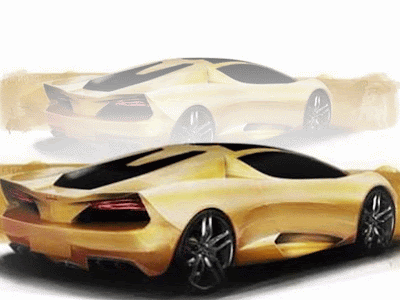
It seems that many young designers from the Lamborghini race car design to create the best future. Here comes yet another proposal for a Raging Bull model, this time from American Adam Denning inspired by Michelangelo’s La Pieto who happens to be a designer for Lockheed Martin USA. The Navarra is design study for a flagship Lamborghini super sports car to replace the current Murcielago model.
The shape of the curves and how they interwine with each other give the Lamborgihini Navarra Concept Study these organic forms. The way Mary’s garments flow down and fold over each other was the main inspiration for the Navarra overlaping surfaces and organic shapes.
Adam Denning plan to put all the V12 flagships of the brand from the Miura to the Murcielago and the Navarra would make use of a carbon-fiber frame and carbon-fiber panels with power coming from a V12 engine.
The new 2010 Lamborgihini Navarra Concept was created as a successor to the Bat, Denning tried to imagine all V12 models the company logo from the Miura to the Lamborghini Murcielago and hence, created a vehicle that only belonged to this group, but also was output of these models. The power behind the concept would be a powerful V12 engine producing between 650 and 700 bhp.

Sunday, June 13, 2010

2010 Chrysler Delta Concept Cars at the Detroit Auto Show ready for production

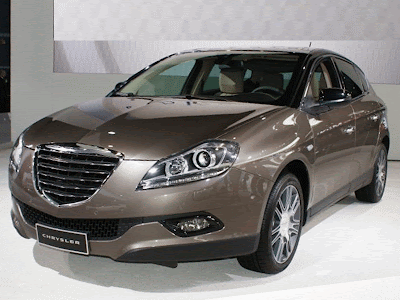
As you know, Fiat-Chrysler alliance will produce a series of models developed by a manufacturer that will be marketed with the logo of other brands belonging to the consortium. To illustrate some of the changes that took place in the Fiat-Chrysler alliance, the Americans from Chrysler unveiled a Lancia Delta with a Chrysler logo. The compact Delta was present at the Detroit Auto Show with a changed front grille, along with Chrysler logo located inside and outside.
2010 Chrysler Delta Concept Cars at the Detroit Auto Show
As a strange by product of the Chrysler/Fiat tie-in, a Lancia Delta wearing Chrysler badges appeared at the Detroit Auto Show’s Chrysler exhibit. There was no press release about the car. What’s more, Chrysler spokesmen seemed as surprised as we were. Let’s assume this was merely an exercise to see how the public would react.
Lancia debuted the new Delta, and this Chrysler concept cars apparently exists to demonstrate to the public that Chrysler now has foreign fingers in its pie. Powertrain? No details available, although twin exhaust tips in the rear suggest it has an engine. In Europe, the Delta is available with a choice of five powerplants; gasoline units are 1.4- and 1.8-liter turbo fours and there are also 1.6-, 1.9-, and 2.0-liter diesel inline-fours. Brembo brakes do this car’s stopping, and it wears 225/45-17 Goodyear Excellence rubber.
The only difference between this and the Delta sold in Russia, Turkey and the U.K. is the grille and Chrysler's name on the back end. Surprisingly, the exterior design fits well within the current state of Chrysler products and easily outshines most of what's on dealer lots right now. The interior looks a little disjointed for American tastes, however.
While there are a number of engines for the Delta overseas, it would likely get one of the new four- or six-cylinder engines Chrysler unveiled last week.
Although Chrysler Delta will not be sold too soon on the market in the United States of America, it exemplifies the changes that take place in the ranges of the two manufacturers in the alliance. We can expect the Dodge models to receive the logo of Alfa Romeo when Dodge will be sold in the US, and Dodge models receive similar treatment in Europe.
2010 Chrysler Delta Concept Cars apparently exist to demonstrate to the public that Chrysler now has foreign fingers in its pie. Although twin exhaust tips in the rear suggest it has an engine. In Europe, the Delta is available with a choice of five powerplants. Chrysler could learn from the Delta’s sumptuous interior. Tan leather seats are trimmed with fat black piping and the black leather covered dash is stitched with contrasting tan thread to match the seats.
Chrysler could learn from the Delta’s sumptuous interior. Tan leather seats are trimmed with fat black piping, and the black leather-covered dash is stitched with contrasting tan thread to match the seats. A panoramic full-length glass roof, navigation system, and automatic climate control attest to the luxurious trappings available on the car in Europe. 
Although the interior looks like a lovely place to pass the miles, we think the car just looks awkward, with more of a goofy French style than the sensuous shapes we expect from Italians.